What a mortise lock is
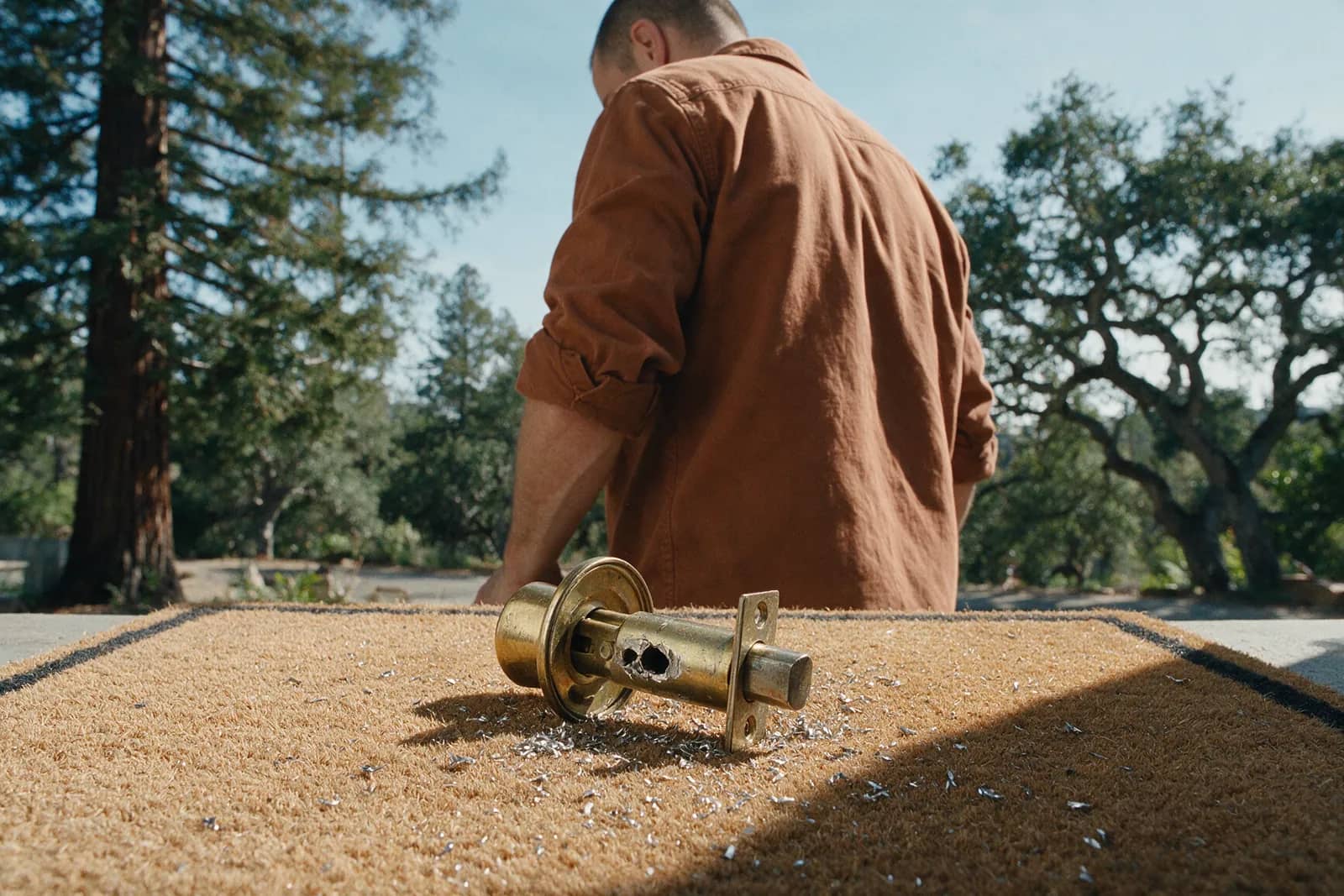
The houses on the streets between El Camino Real and Edgewood Park went up in the 1920s and 30s, and most of them were fitted with a mortise lock. The word means the pocket: a rectangular cavity cut into the edge of the door, several inches tall and an inch or so wide, into which a steel case slides. Inside the case are the latch, worked by the knobs, and a deadbolt, worked by the key, and the springs and levers that connect them. A cylinder threads through the face of the door into the case from outside; a thumbturn or a second cylinder does the same from inside. A brass or bronze plate on the door edge, the faceplate, holds it all in.
That is a different animal from the locks fitted to everything built after the war, which are bored through the door in two round holes and drop into place. A mortise set is one piece of hardware doing two jobs, held in a pocket cut by hand, and the door around it was cut for that pocket and nothing else. Understanding that explains every choice that follows.
What a century does to it
The steel case outlasts everything around it. What wears is the small parts. The latch spring softens until the latch no longer snaps into the strike and the door has to be pushed to catch. The hub that the knob spindle turns in wears oval, so the knob turns a quarter before anything happens, or spins freely because the set screw in the spindle has let go. The cylinder plug wears until a similar key turns it. And the door itself, a slab of old-growth fir, swells in the wet months and shrinks in the dry, so a bolt that throws in August binds in February.
None of that is a reason to remove the lock. Most of it is a reason to take the case out, clean a century of graphite and dust from it, replace a spring, refit the spindle and put it back. The technician says on the call what the symptom suggests and says at the door what the case actually needs, since the two are not always the same.
Rekey, repair, or a new cylinder in the old case
If the case works and the problem is who has keys, the answer is a rekey at $25 to $41 per cylinder. The cylinder unthreads from the face of the door, the plug is repinned to a new key, and it goes back. The house looks exactly as it did. That is the right visit after a purchase, after a tenant, or after a decade of contractors, and it can be done on the front door, the back door and the side gate in an afternoon.
If the cylinder itself is the problem, worn past repinning or on a keyway no blank has been cut for since the 1950s, a modern mortise cylinder goes into the old case. Mortise cylinders have used a standard thread for a very long time, and a new one in the right length and finish threads into a 1926 case as if it were made for it. That is a replacement at the low end of $115 to $309, it keeps the case, the knobs and the escutcheons, and it puts the door on a keyway that a hardware store can cut a copy for.
When the case has to go
Sometimes the case is cracked, or the deadbolt has sheared, or the maker's name on the faceplate belongs to a company that closed before the war and no part inside matches anything made since. Then the choice is between two kinds of replacement. The first is a new mortise case of the same size, which slides into the same pocket, takes the same cylinder and spindle, and puts the glass knobs and the brass plates back on afterwards. That is $115 to $309 and it is the answer when the door is worth keeping as it is, which on these streets is nearly always.
The second is to fill the pocket and bore the door for a modern tubular lock and deadbolt. It is done, and it is what a general handyman will suggest first, and it is usually the wrong answer for a Mount Carmel door. The pocket is filled with a block that never quite matches, the escutcheons go into a drawer, and the door has lost the one thing that set it apart from a door in a tract built forty years later. The technician will say when it is the only option, and it seldom is.
A modern deadbolt above the mortise
What many owners do instead is keep the mortise set for the daily work and add a modern deadbolt above it. The bolt on a 1920s case is short, and the strike it throws into was fixed with two small screws into a one-inch jamb. A modern single-cylinder deadbolt, bored six inches above the mortise cylinder, throws a one-inch bolt into a strike screwed through the jamb and into the framing, and the old-growth fir behind the casing on these houses holds a three-inch screw better than anything milled today. That is a replacement at the low end of $115 to $309 and it does not touch the original lock.
Two things to get right. The new deadbolt should be on the same keyway as the new or rekeyed mortise cylinder so that the door has one key, which means choosing the deadbolt to suit the cylinder. And the door must close without being lifted or shouldered, since a bolt that binds in February is a door that needs an eighth of an inch planed off, not a lock that needs replacing.
The side gate, the garage built for a Model A, and the figure
The front door is the door owners think about. The lockouts happen at the side gate, which drops its latch behind someone taking the bins out, and at the night latch on the back door. A house lockout is $119 to $205, and on a mortise door the technician works the cylinder rather than anything that would mark a door that has survived since the Coolidge administration. The garage on these lots was built for one small car and has a side door on a padlock; a proper cylinder there, keyed to the house, is a replacement at $115 to $309. A smart lock is asked about, and the honest answer is that a mortise-prepped door is not bored for one and the work to bore it is the work described two sections up. Put the smart lock on the back door or the garage door instead, at $175 to $449.
Sequoia Lock & Key works to a promise called Settled Before the Key: one figure on the call covering the visit, the labor and the parts; the technician's name and a thirty-minute window by text before the van leaves; opened without damage first, drilling only after you agree, at the same figure; card or tap at the door with an itemized receipt by email. Arrival to the streets below Edgewood Park runs about twenty-one minutes, and the van stops at the street, since the driveways here were laid out for a car half its width.
Quick answers
Can a 1920s mortise lock be rekeyed?+
Usually. The cylinder unthreads from the face of the door and is repinned to a new key at $25 to $41, if the plug is not worn past the point where a similar key already turns it. If it is, a modern mortise cylinder threads into the old case at the low end of $115 to $309.
Should I replace the mortise set with a modern lock?+
Seldom. If the case is sound it is cleaned and re-sprung. If it is not, a new mortise case fits the same pocket and takes the same knobs and plates. A modern deadbolt above the mortise set, at $115 to $309, adds the longer bolt and the strike into framing without removing anything original.
Will a smart lock fit a mortise door?+
Not without boring the door, which is the change most owners want to avoid. The sensible place for a smart lock on these houses is the back door or the garage door, at $175 to $449, with the front door kept mechanical and rekeyed to the same key.
Need it handled rather than read about?
(650) 399-7296More guides